Best Situations to Use a Temporary Email Address (Lessons From Someone Who's Been Burned Too Many Times)
A few months back, I signed up for a "free" PDF converter tool because I needed to merge two files in a hurry. Two minutes after giving them my real email, I had a confirmation message, a "welcome" newsletter, and an offer for a premium plan I never asked about. By the next week, that same inbox was getting daily emails from three other companies I'd never even heard of. Turns out that one little tool had sold or shared my email somewhere down the line.
That was the moment I started actually using temporary email addresses instead of just hearing about them. And honestly? It changed how I browse the internet.
If you've ever felt that creeping regret after typing your real email into a random signup form, this article is for you. I'm going to walk you through exactly when a temporary email makes sense, based on stuff I've actually run into, not just theory.
What Even Is a Temporary Email (Quick and Simple)
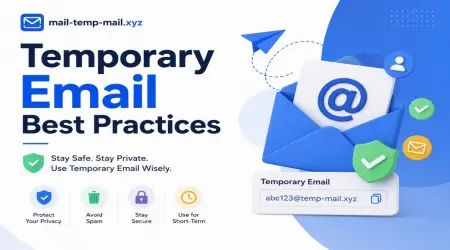
No long definitions here. A temporary email is basically a disposable inbox you can use for a few minutes, hours, or days. You don't sign up for it with a password or your real identity. You just open a site like mail-temp-mail.xyz, get a random email address instantly, and use it wherever you don't want your real inbox involved.
Once you're done, you just close the tab. No cleanup, no unsubscribing later, no spam following you around for years.
Now let's get into the real situations where this actually saves you trouble.
1. Signing Up for "Free Trials" That Definitely Want Your Data
This is the big one. Almost every free trial — streaming apps, online courses, design tools, AI writing apps — asks for an email before you even see what you're trying.
I tested this myself with a random online course platform. I used a temp email just to see what would happen. Within ten minutes, that inbox had four marketing emails and one fake "your trial is expiring, upgrade now" message — even though I hadn't even finished registering.
If I had used my real email, that mess would be sitting in my inbox right now, probably forever, since most of these platforms make unsubscribing harder than it should be.
Best move: if a service wants your email just to "try" something, use a disposable one. If it's genuinely useful, you can always register again with your real email later.
2. Downloading "Free" Resources Like Ebooks, Templates, or Guides
You know the pattern. You want a checklist or template, and suddenly there's a form blocking you that says "enter your email to download."
I used to give my real email every time, thinking it was harmless. It wasn't. Some of those lead-magnet pages exist purely to grow email lists for future sales pitches.
Now I just generate a quick temp address, grab the file, and move on. No guilt, no future spam.
3. Testing Apps or Websites You're Not Sure About
This happened to a friend of mine. He downloaded a budgeting app that looked legit, used his personal email to sign up, and within a week started getting phishing-style emails pretending to be "account verification" messages. Sketchy stuff.
If you're trying out a new app and you're not 100% sure about its reputation, a disposable email keeps your real identity insulated until you trust the platform.
This is especially smart for:
- New crypto or trading apps
- Random Chrome extensions that require login
- Beta versions of software
- Apps you found through ads, not recommendations
4. Avoiding Spam When Commenting or Signing Petitions
I used to comment on blogs and forums using my real email out of habit. Big mistake. Some of those comment sections are scraped by bots that collect emails for spam lists.
Now, for anything public — comment sections, online petitions, contests — I always use a temp email. It still lets me participate without exposing my real inbox to random harvesting bots.
5. One-Time Document Verifications or Confirmations
Sometimes you need an email just to confirm something once. Like verifying you're human on a site, or getting a one-time download link.
I ran into this when I needed to access a single research PDF that required "email verification" to send a download link. I wasn't about to start a relationship with that website. A temp email handled the verification, I got my PDF, done.
6. Avoiding Your Inbox Turning Into a Marketing Battlefield
This is more of a lifestyle situation than a specific case. If your main inbox is already cluttered with promotions, the smartest move is to stop feeding it more.
I started keeping two separate "worlds":
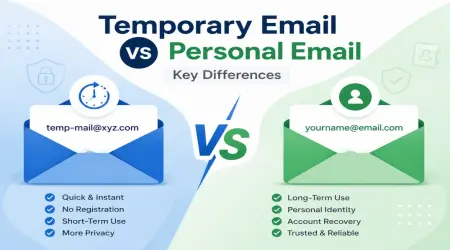
- My real email → banking, work, family, important accounts
- Temp email → anything random, anything testing, anything risky
This single habit cut my daily spam by more than half. I'm not exaggerating. My main inbox finally feels usable again.
7. When You Want to Avoid Account Tracking Across Multiple Logins
Some websites quietly link your activity across services using your email as an identifier. If you're someone who values a bit of privacy (who isn't these days?), using a separate disposable address for each random signup avoids that kind of cross-tracking.
This is especially useful for shopping comparisons or testing multiple similar apps where you don't want all your usage data tied to one identity.
Step-by-Step: How I Personally Use a Temp Email (Simple Process)
Here's exactly what I do, step-by-step, whenever I need a disposable email:
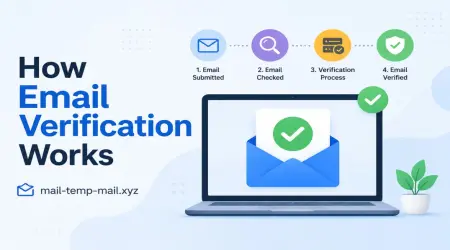
Step 1: Open mail-temp-mail.xyz Step 2: Instantly get a random email address — no signup required Step 3: Copy that address and paste it into whatever website is asking for an email Step 4: Go back to the temp mail tab and wait for the confirmation/verification email to arrive Step 5: Click the link or grab the code you need Step 6: Close the tab — that's it, no account stays behind
It takes less time than typing out your real email and dealing with the spam aftermath.
Mistakes I Made Before I Got the Hang of This
I want to be honest here, because I didn't get this right the first few times.
Mistake 1: I used a temp email for an account I actually wanted to keep long-term, like a fitness app I genuinely liked. Big problem — once that temp inbox expired, I lost access completely. Lesson learned: only use temp email for things you don't plan to keep using.
Mistake 2: I assumed every temp mail service was equally safe. Some sketchy ones show ads that look like phishing attempts. Stick to clean, reliable services without shady popups.
Mistake 3: I tried using temp email for something that required ongoing verification, like a banking-related signup. Obviously didn't work, and honestly, that's not what temp email is for. Never use it for anything tied to your real identity, money, or long-term communication.
When You Should NOT Use a Temporary Email
To keep this balanced and honest, here are situations where a temp email is a bad idea:
- Signing up for your bank or financial apps
- Government-related registrations
- Long-term subscriptions you actually plan to use
- Anything requiring identity verification
- Job applications or professional accounts
- Communicating with real people you want to stay in touch with
Temp email is a shield for short-term, low-trust situations — not a replacement for your everyday identity.
Final Thoughts
After using temp email regularly for a while now, my browsing life feels noticeably cleaner. I don't dread checking my inbox anymore. I don't get random "exclusive offers" from companies I forgot ever existed. And I feel more in control of which platforms actually deserve access to my real contact info.
If you're tired of spam piling up just because you wanted to download one ebook or try one app, give a tool like mail-temp-mail.xyz a shot. It takes one click, saves your real inbox from chaos, and honestly makes browsing the internet feel a lot less like a minefield.
Once you start using temp email in the right situations, you'll wonder why you didn't start sooner.